Kūkas Wind

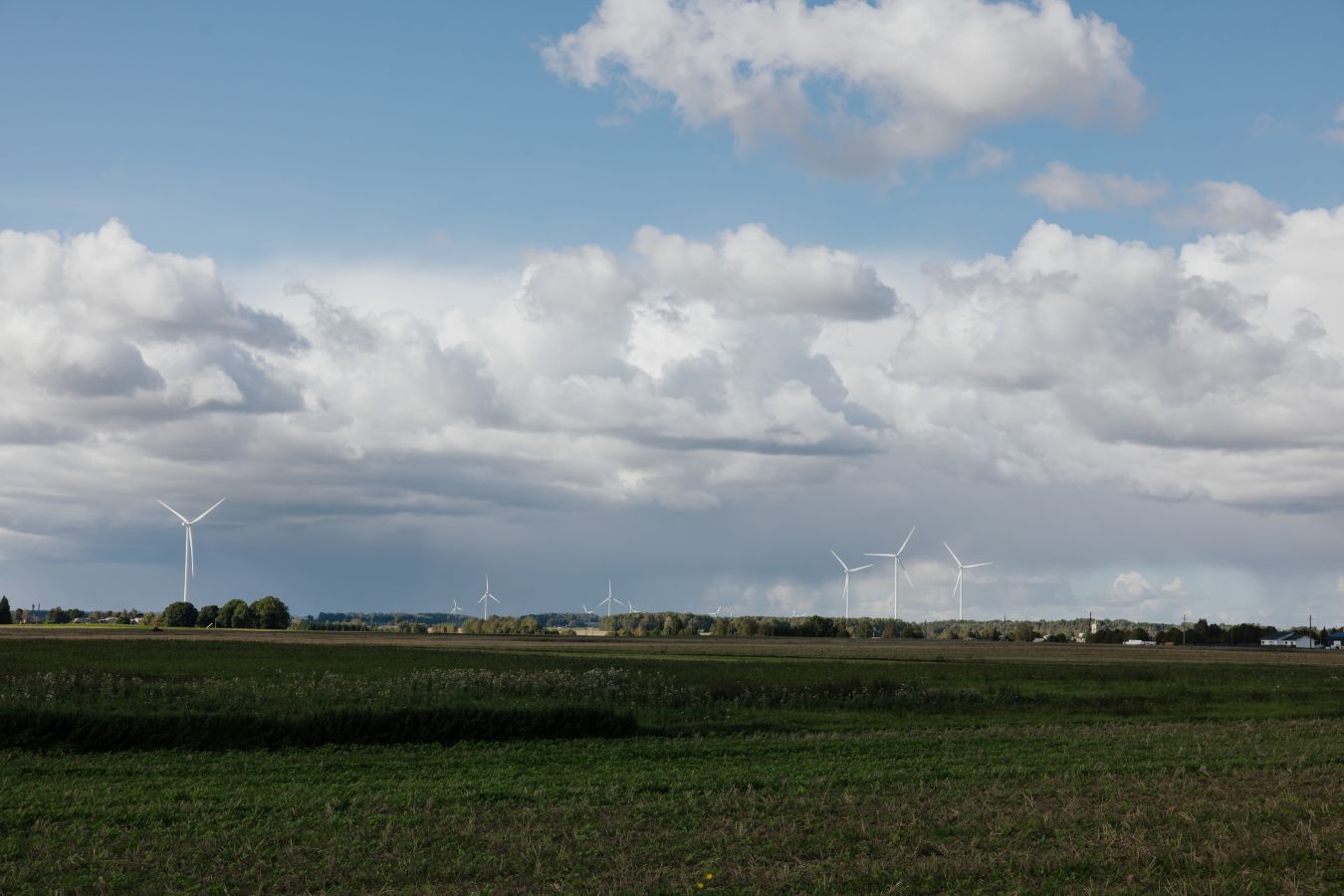
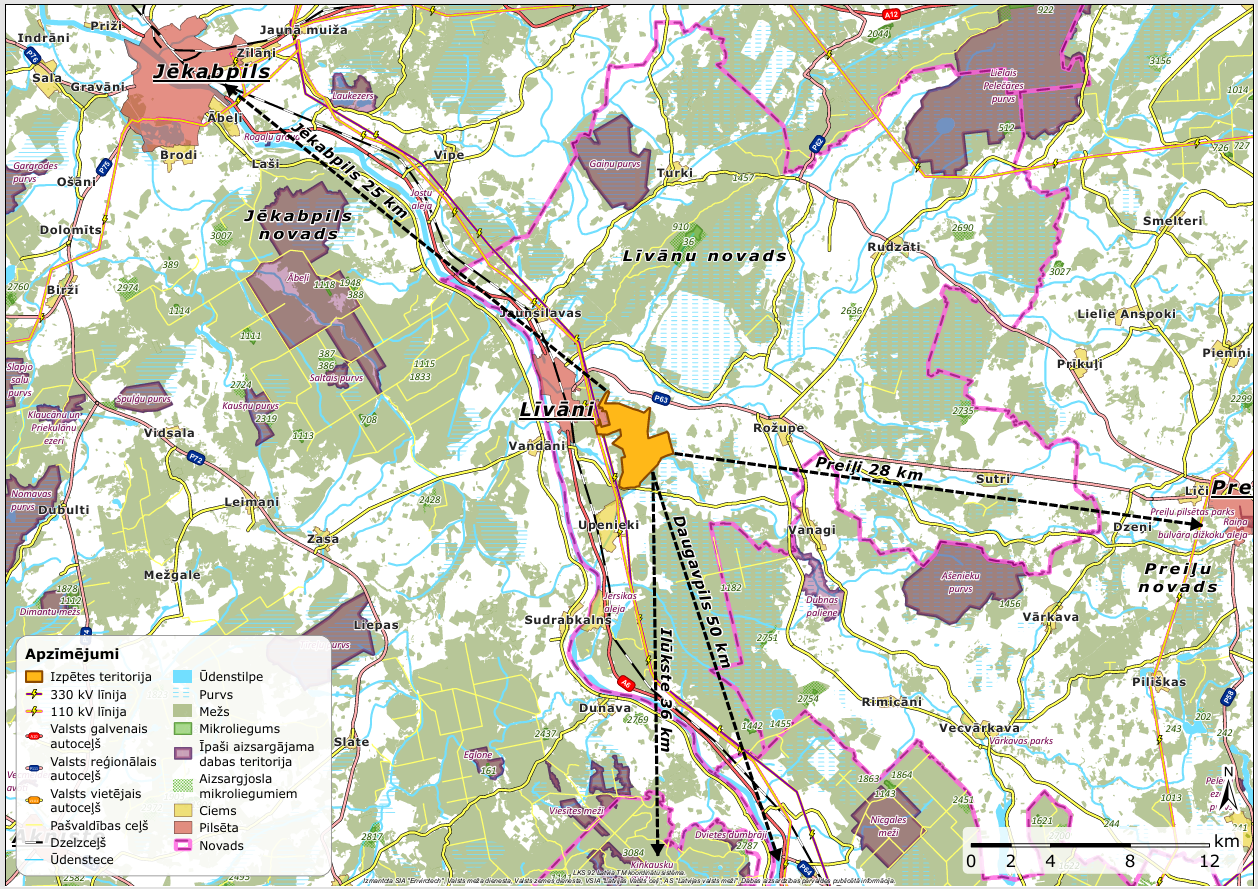
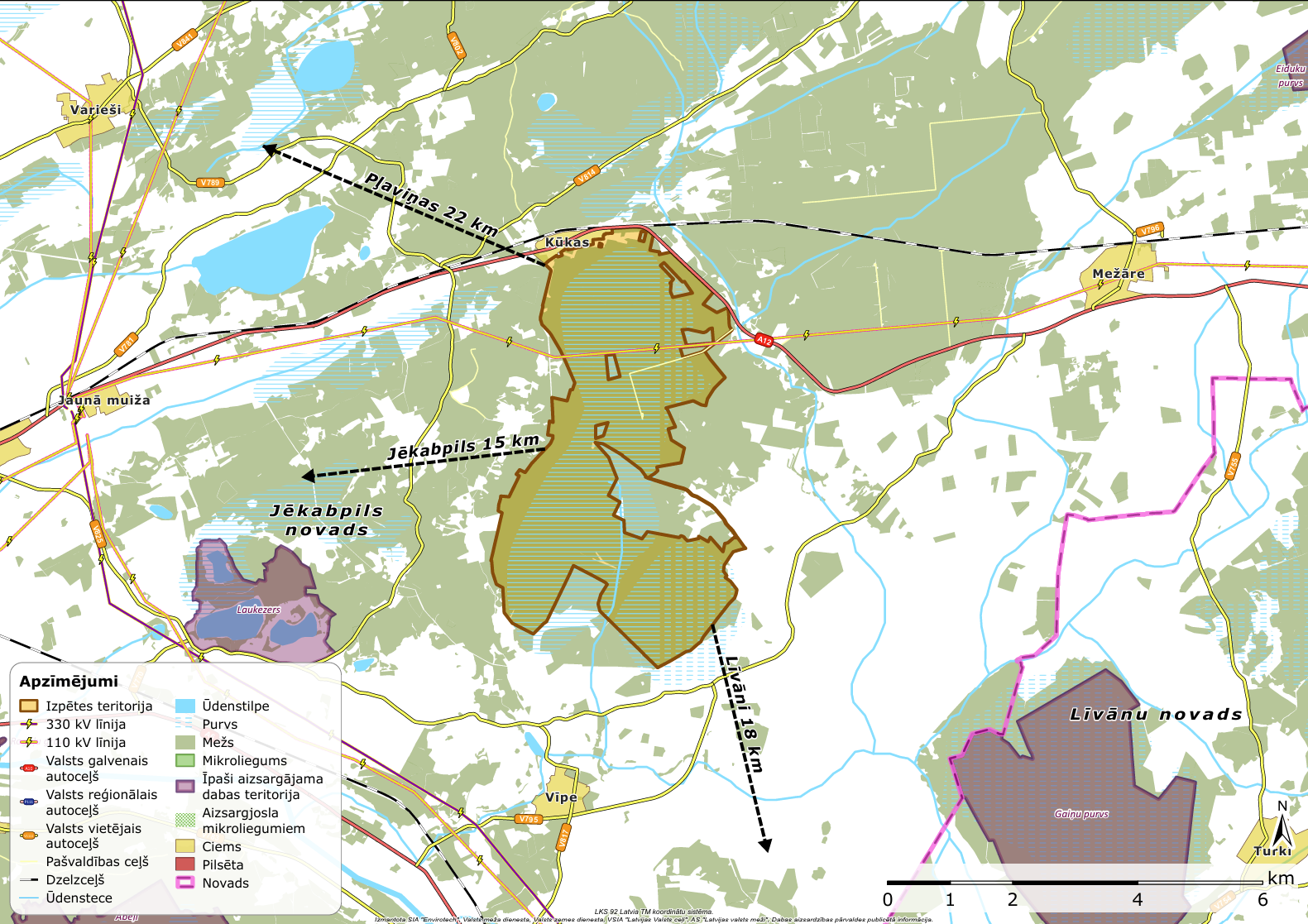
The planned Kūkas wind farm is located in the Kūkas and Vīpes parishes of the Jēkabpils district. It is planned to be a renewable energy power plant with up to 23 wind turbines, with a total capacity of ~184 MW, production up to 515 GWh.

Status
Research stage
Location
Kūku Parish and Vīpe Parish of Jēkabpils Municipality
Production
515 GWh
Turbines
23

Why Kūku Wind Farm?

Kūkas”, located in Kūku Parish and Vīpe Parish of Jēkabpils Municipality, is a forthcoming renewable energy power station. It is planned to build up to 23 wind turbines, with a total capacity of around 184 MW (each with a nominal capacity around 8 MW), and production of 515 GWh.

The territory of Kūku Parish and Vīpe Parish is suitable for renewable electricity production using wind. The surrounding environmental conditions meet the prerequisites for building a wind park, there is access to a high-voltage grid connection, and there are no significant state-protection related restrictions that might impede development.

All these factors create favourable ground for the construction of the “Kūkas” wind park, which will provide the local community with additional income, improved environment and infrastructure, as well as new business opportunities.

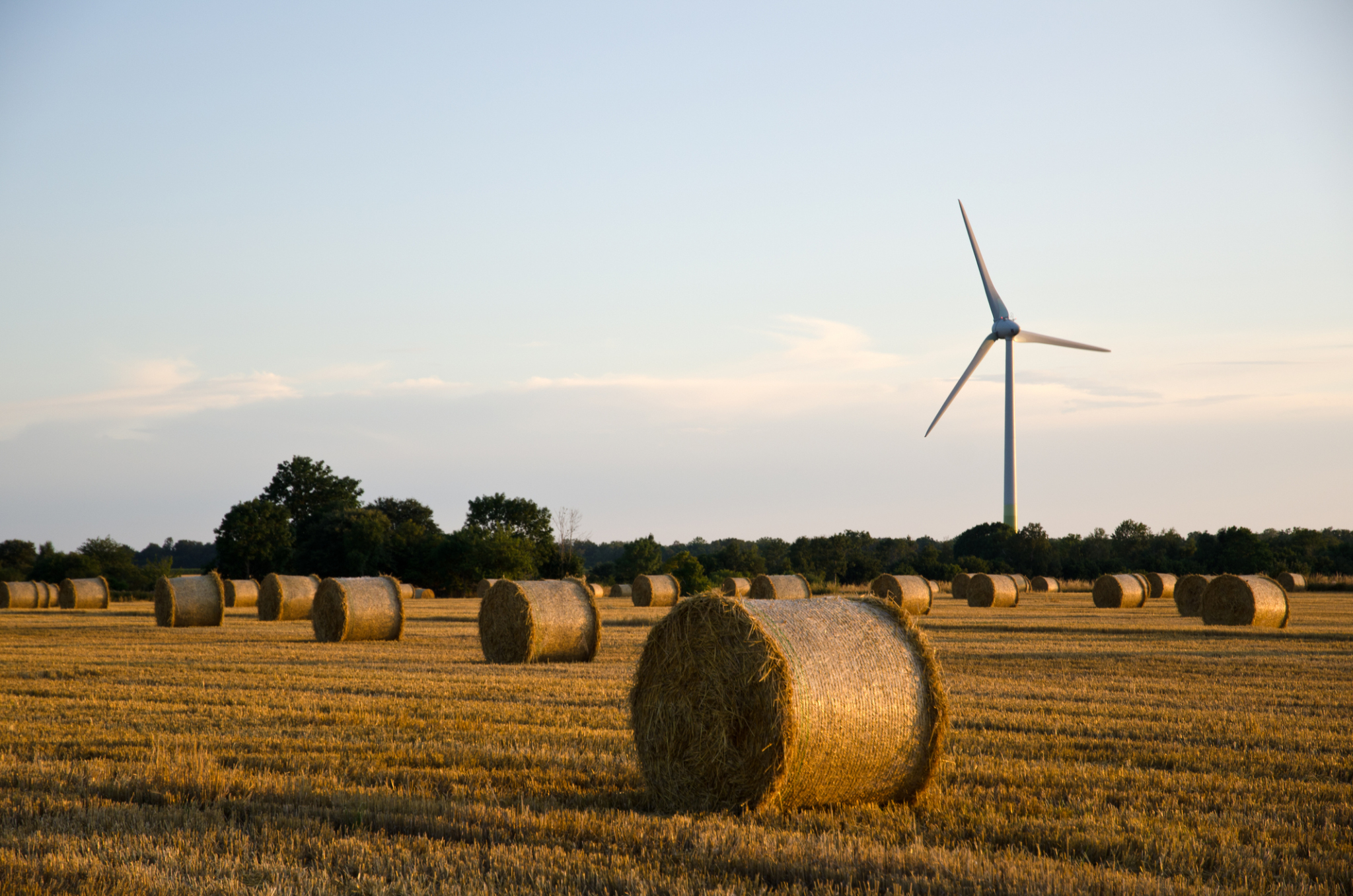
Woman wearing white cap sits on the field at sunset. Wind turbines in the background

Benefits for local communities

Local residents will benefit from the legally mandated payments for community development – EUR 2,500 annually for each installed megawatt (MW). Up to 90% of this amount may go to residents living within 2 km of the wind park. The remainder will be at the disposal of the municipality to decide on support to local residents.

For households, this means additional income of about 1-3 times the minimum monthly wage. Support will be available for 30 years.

In addition, local infrastructure improvements are planned, especially road upgrades.

During the project, Vindr also plans additional support activities to improve social infrastructure in the parish affected by the construction of the wind park.

Project timeline

2024

Project idea

Project feasibility study and registration of building rights

Year 2

Planning

Initiation and development of an EIA (Environmental Impact Assessment) -> Initiation of a local plan

Current phase

Year 3

Harmonization

Public consultation on the EIA -> Public consultation on the local plan -> Approval of the EIA -> Approval of the local plan

Year 4

Construction design

Development of a construction project for a wind farm and its surrounding infrastructure

Year 5

Approval of the construction project

Approval of the construction project

Year 6

Construction

Year 7

Operation of the wind farm

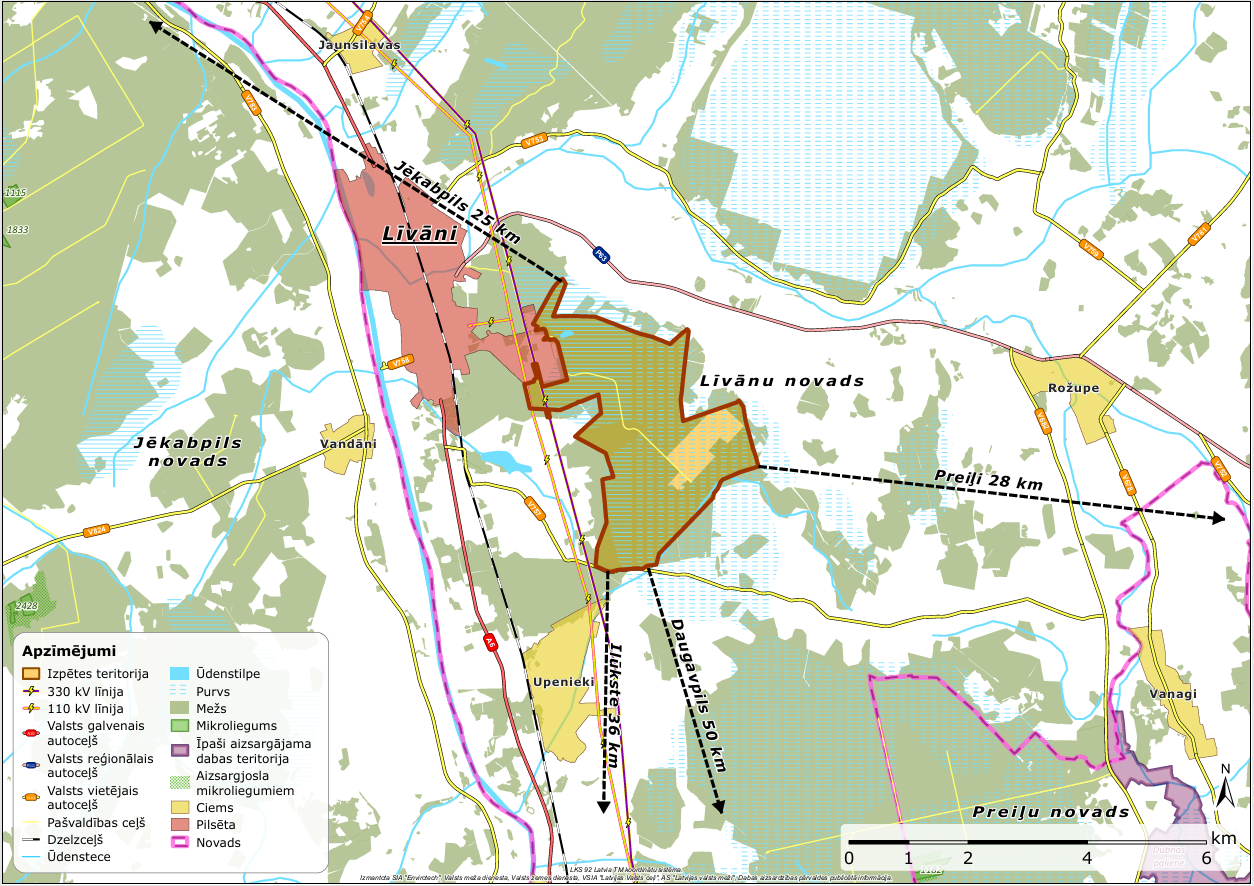
Līvāni Wind

The planned Līvāni wind farm is located in the Jersika parish of the Līvāni district. It is planned to be a renewable energy power plant with up to 13 wind turbines, with a total capacity of ~104 MW (each station has a nominal capacity of ~8 MW). Production 26 GWh.

Status
Research stage
Location
Jersika Parish, Līvānu Municipality
Production
26 GWh
Turbines
13
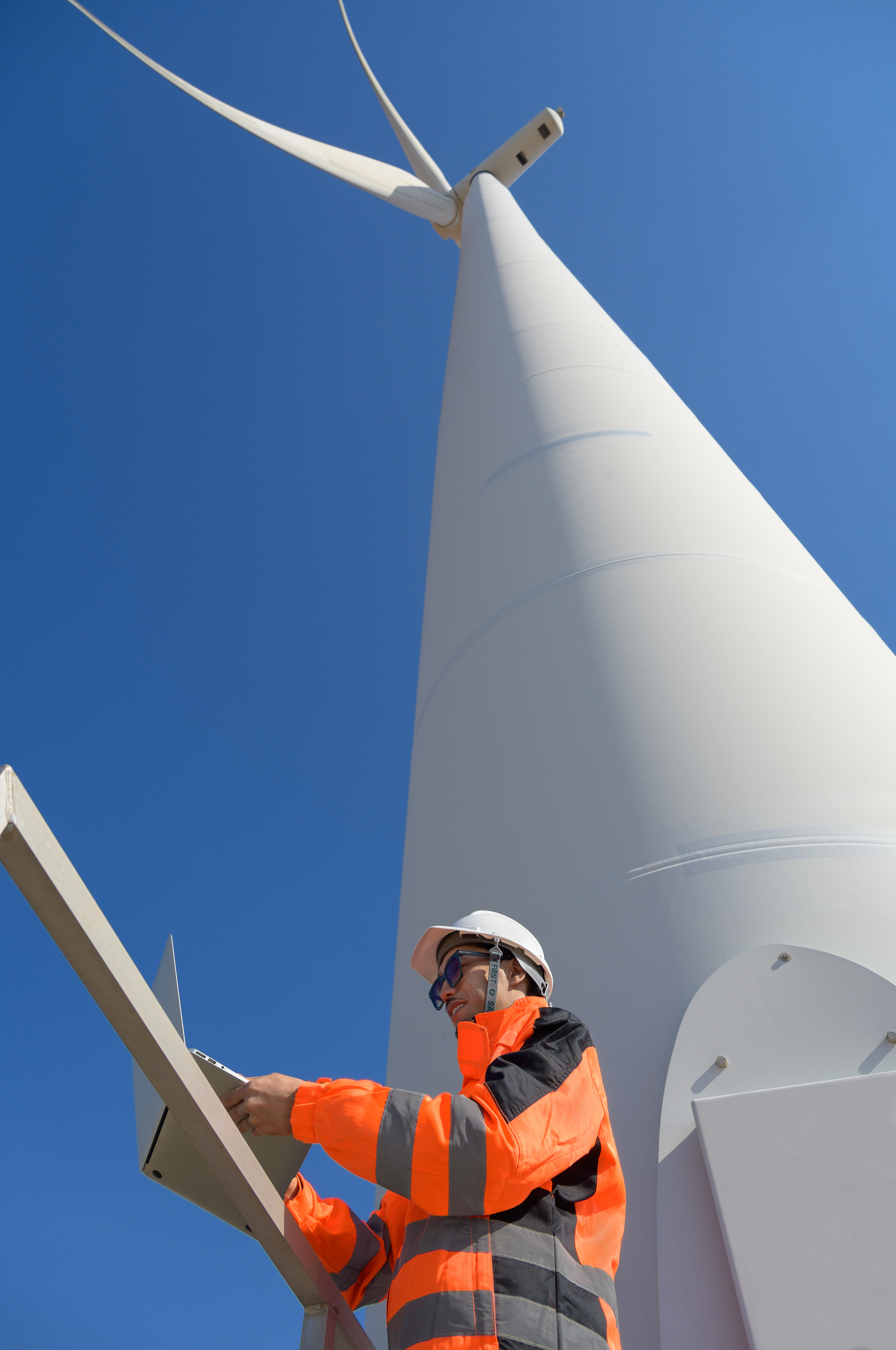
Male engineer in bright orange safety vest and white hard hat performing maintenance checks on white wind turbine by using laptop while standing against clear blue sky background. Renewable energy and clean technology concept

Why Līvāni wind farm?

“Līvāni” is a wind farm project in the Jersika parish of the Līvāni district is a renewable energy power plant under construction. It is planned to build up to 13 wind turbines with a total capacity of ~ 104 MW (the nominal capacity of each station is ~ 8 MW).

The territory of Jersika Parish is suitable for the production of renewable electricity using wind power. The environmental conditions meet the prerequisites for the construction of a wind farm, there is access to a high-voltage power grid, and there are no significant restrictions related to state protection that could hinder development. All of the above factors create favorable conditions for the construction of the Līvāni wind farm, which will provide the local community with additional income, a more orderly environment and infrastructure, as well as new business opportunities.

Vertical shot of cheerful primary learner presenting green energy project holding small solar powered wind turbine and big solar panel showing devices to class

Benefits for local communities

Local residents will benefit from mandatory payments stipulated by law for community development – €2,500 per year for each megawatt (MW) installed.
Up to 90% of this amount may go to residents living less than 2 kilometers from the wind farm. The remainder will be at the disposal of the municipality to decide on support for local residents.

For households, this will mean additional income of approximately 1-3 minimum monthly wages. The support will be available for 30 years.

In addition, improvements to local infrastructure are also planned, particularly road repairs.

During the project, Vindr also plans additional support activities to improve the social infrastructure in the area affected by the construction of the wind farm.

Project timeline

2024

Project feasibility study

Registration of building rights

Year 2

Approval and discussion

Initiation and development of an EIA (Environmental Impact Assessment) -> Initiation of a local plan

Year 3

Coordination

Public consultation on the EIA -> Local plan and public consultation -> Approval of the EIA -> Approval of the local plan

Year 4

Construction design

Development of a construction project for a wind farm and its surrounding infrastructure

Year 4-5

Approval of the construction project

Year 5-6

Construction of a wind generator park

Year 7

Commencement of wind generator park operations

Ošenieki Wind

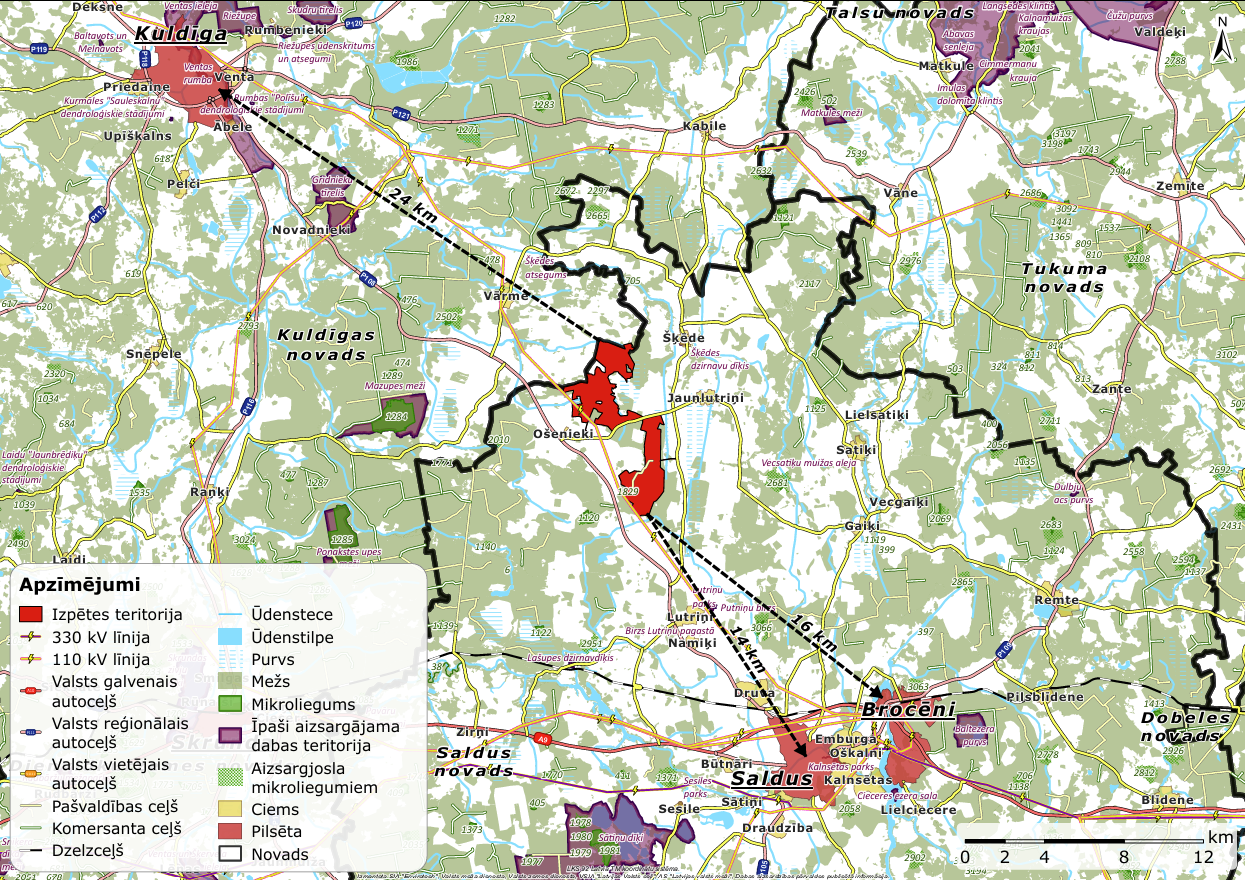
The planned Ošenieki wind farm, located in Jaunlutriņi Parish (Saldus Municipality) and Vārme Parish (Kuldīga Municipality), will consist of up to 18 wind turbines, each with a nominal capacity of up to 7.2 MW.

Status
Research stage
Location
Saldus Municipality and Kuldīga Municipality
Effect
130 MW
Production
Ca 470 Gwh
Turbines
18
Homes powered

157 000

Why exactly the Ošenieki wind farm?

The “Ošenieki” wind farm project, located in Jaunlutriņi Parish (Saldus municipality) and Vārme Parish (Kuldīga municipality), is a renewable energy power plant currently under planning. The plan includes installing up to 18 wind turbines, each with a nominal capacity of 7.2 MW.

The territory of Jaunlutriņi and Vārme parishes is very suitable for the production of renewable electricity using wind power. The environmental conditions meet the requirements for the construction of a wind farm, there is access to a high-voltage power grid, and there are no significant restrictions related to state protection that could hinder development. All of the above factors create favorable conditions for the construction of the Ošenieki wind farm, which will provide the local community with additional income, a more orderly environment and infrastructure, as well as new business opportunities.

The wind farm will be built on both state-owned forest land and private land, so local landowners will be able to earn a stable income from the building rights agreements they have signed. This is an opportunity not only to produce green energy, but also to invest in the local community by supporting projects that improve life in the Saldus region.

Benefits for local communities

Local residents will benefit from mandatory payments stipulated by law for community development – €2,500 per year for each megawatt (MW) installed.

Up to 90% of this amount may go to residents living less than 2 kilometers from the wind farm. The remainder will be at the disposal of the municipality to decide on support for local residents.

For households, this will mean additional income of approximately 1-3 minimum monthly wages. The support will be available for 30 years.

In addition, improvements to local infrastructure are also planned, particularly road repairs.

During the project, Vindr also plans additional support activities to improve the social infrastructure in the parish affected by the construction of the wind farm.

Project timeline

2024

Project feasibility study

Registration of building rights

Year 2

Approval and discussion

Initiation and development of an EIA (Environmental Impact Assessment) -> Initiation of a local plan

Current phase

Year 3

Harmonization

Public consultation on the EIA -> Local plan and public consultation -> Approval of the EIA -> Approval of the local plan

Year 4

Construction design

Development of a construction project for a wind farm and its surrounding infrastructure

Year 4-5

Approvals

Year 5-6

Construction

Year 7

Start of operation of wind turbine farm

Ackesberg Wind

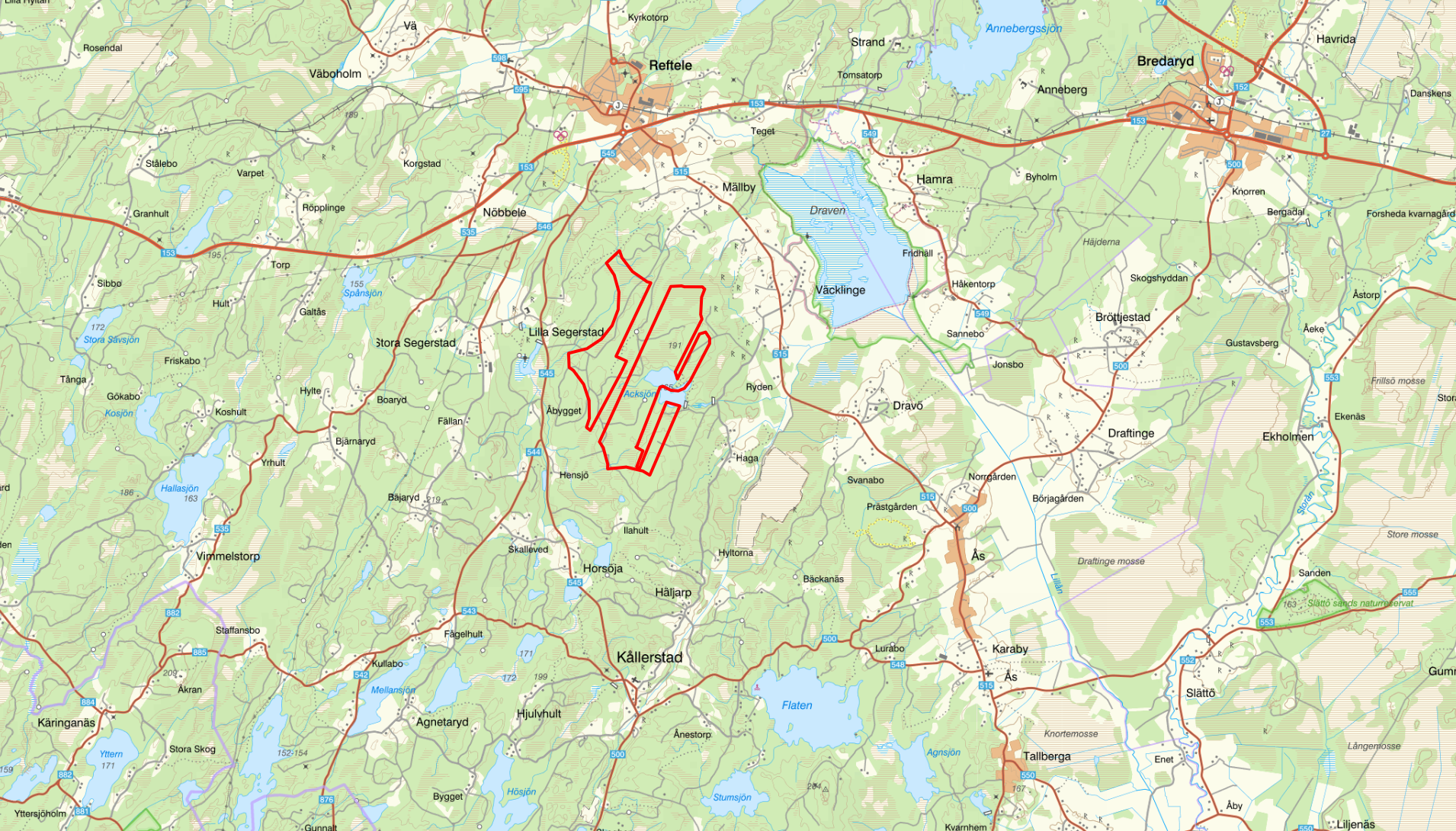
Ackesberg can help Gislaved Municipality, along with local residents, communities, and businesses – in the green transition by providing locally produced renewable electricity.

Status
Project concept
Location
Gislaved Municipality, Sweden
Turbines
7-10, with potential battery storage
Production
Ca 200 GWh per year
Installed capacity
Approximately 50–75 MW
Cover annual electricity use of
approximately 10,000 homes
Woman wearing white cap sits on the field at sunset. Wind turbines in the background

Local Collaboration and Impact

Sweden needs to rapidly expand renewable electricity generation to achieve its climate goals, secure existing jobs, and enable new industrial opportunities. Land-based wind and solar power are the fastest and most cost-effective solutions – developed without financial subsidies.

Local power production strengthens electricity access and reduces bottlenecks in the transmission grid, creating greater security and predictability for local businesses.

In addition to supporting industry, the municipality, local community, and nearby residents will also receive economic benefits. The Swedish Government and the Sweden Democrats have agreed on a compensation model in line with the national inquiry “The Value of Wind”, which proposes that municipalities receive compensation equivalent to the property tax value of the wind farm — while both local communities and nearby residents also receive financial benefits.

Project Contact

Tevåsen Wind

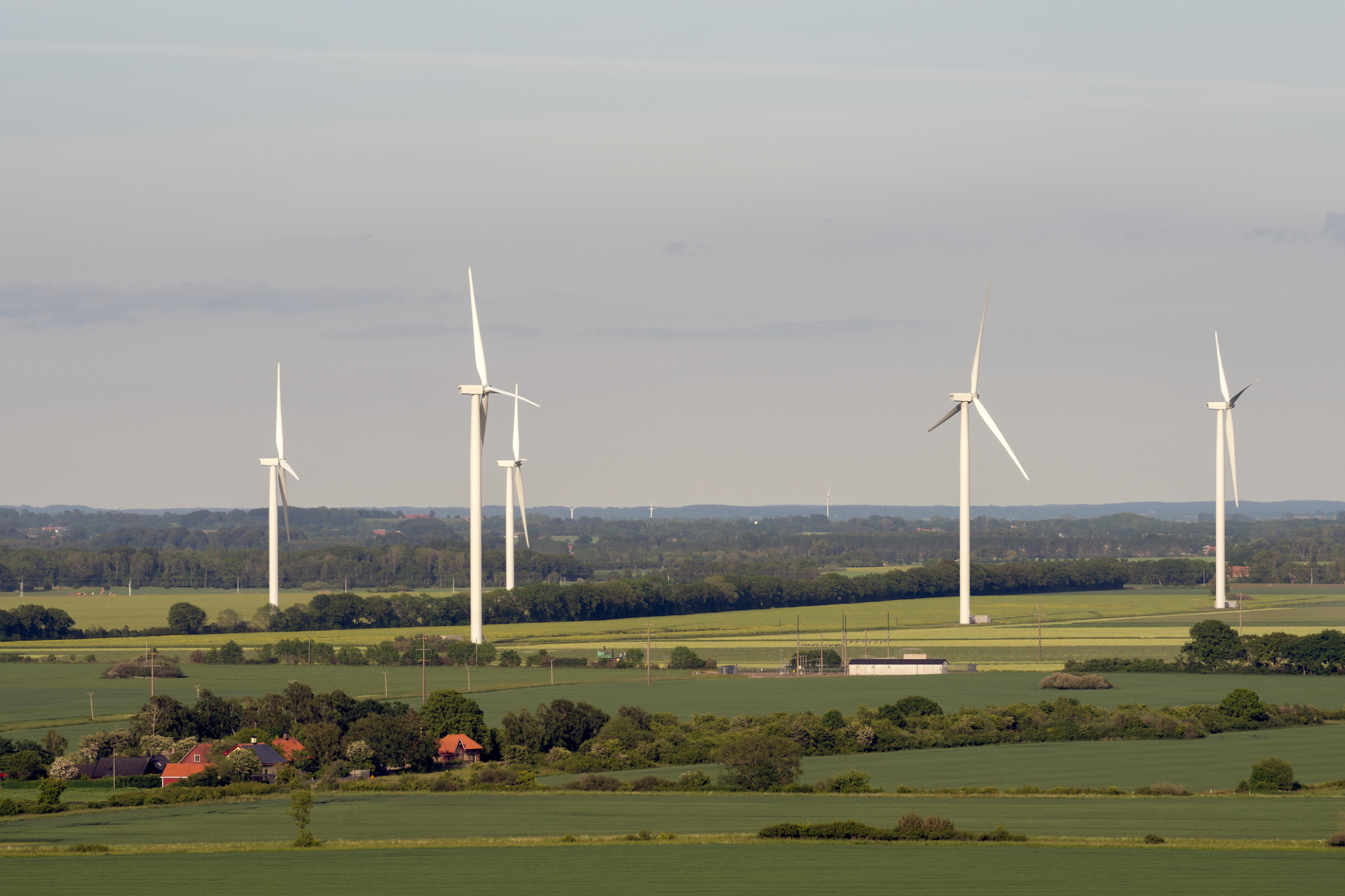
The planned Tevåsen wind farm in Ljusdal Municipality will produce around 415 GWh of renewable electricity annually – enough to power approximately 20,000 homes, with the potential addition of battery storage.

Status
Early phase
Location
Tevåsen, Ljusdal Municipality
Production
415 GWh per year
Turbines
18 (and possibly battery storage)
Effect
ca 130 MW
Homes powered

Supplying energy for approximately 20,000 households annually

Local Collaboration and Impact

Sweden needs to quickly increase its renewable electricity supply in order to cope with climate change, secure existing jobs, and enable new businesses to establish themselves. Land-based wind and solar power are the fastest forms of electricity production that can be implemented without financial subsidies.

Local electricity production means that access to electricity is improved and businesses need to worry less about bottlenecks and transmission capacity in the national grid. This creates security and predictability for entrepreneurs.

In addition to benefiting the business community, the municipality, the local community, and nearby residents will also receive financial compensation. The government and the Sweden Democrats have agreed on compensation in line with the government report “The Value of Wind” and that municipalities should be compensated with an amount equivalent to the property tax for wind power.

If, in accordance with the government’s statements, the municipality receives compensation equivalent to the property tax for 18 turbines, this will amount to an average of SEK 3.6 million per year for the first ten years and a total of SEK 73 million over 30 years. If the community receives 0.25-0.5 percent of the electricity revenue in the form of a so-called community fund, this corresponds to approximately SEK 700,000-900,000 per year.

Local residents should also receive compensation. According to the proposal “The Value of Wind,” anyone who lives within a certain distance (approx. 3 km) of a wind turbine is entitled to compensation.

The amount of compensation depends on the distance to the two nearest wind turbines. If a home is located approximately 1,000 m from a wind turbine, the annual compensation will be approximately SEK 25,000. If the distance is 1,500 m or 2,000 m, the annual compensation will instead be approximately SEK 19,000 and approximately SEK 12,000 per wind turbine, respectively. The maximum compensation that can be received is from two wind turbines per residence.

Stormyran Wind

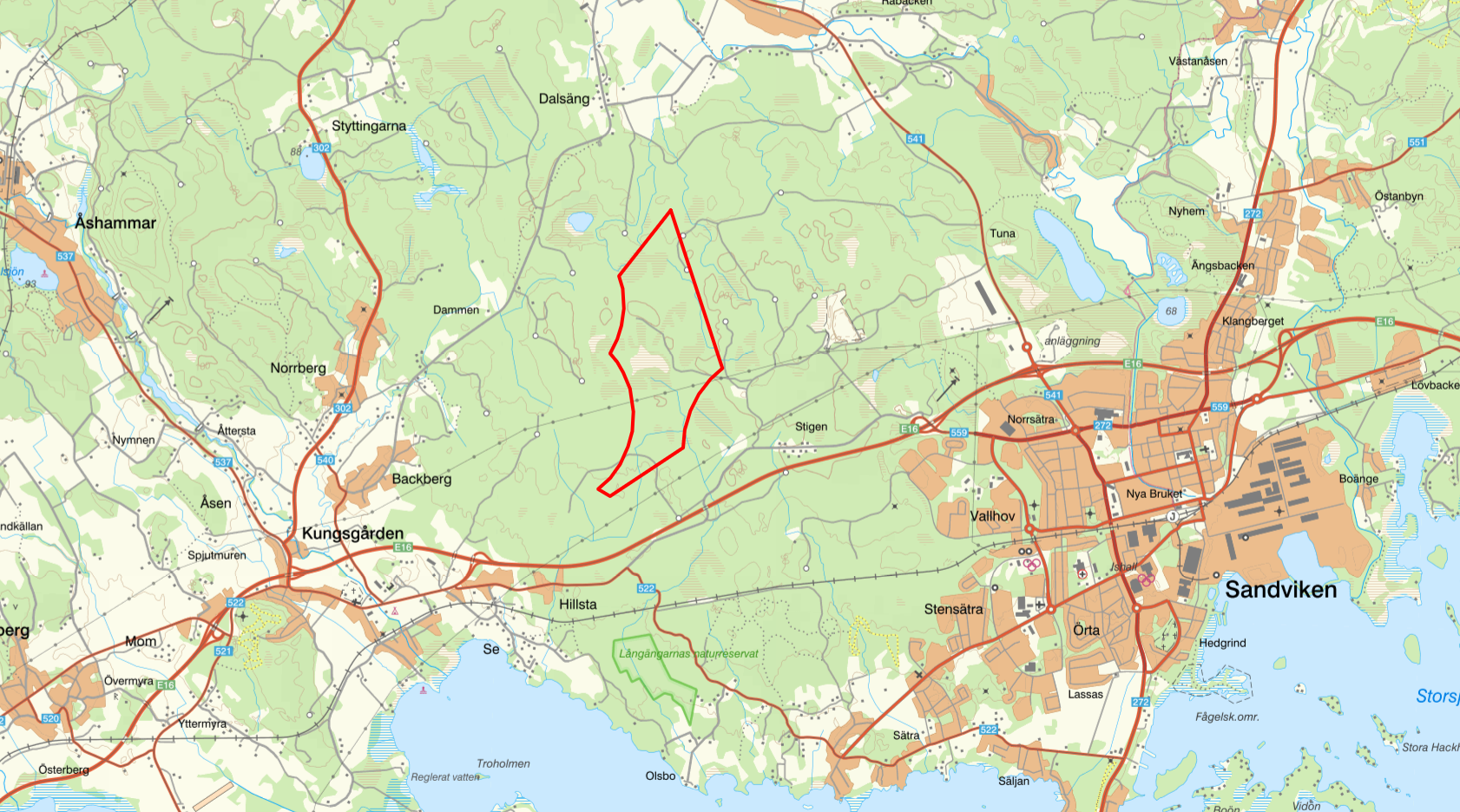
The planned Stormyran wind farm in Sandviken Municipality will produce around 160 GWh of renewable electricity annually from seven turbines, supporting the region’s strong industrial heritage and future growth.

Status
Consultation, Environmental impact statement.
Location
Stormyran, Sandviken Municipality
Production
Ca 160 GWh per year
Effect
Ca 50 MW
Turbines
7 (and possibly battery storage)

Local Collaboration and Impact

Sweden urgently needs to expand renewable electricity production to meet the climate transition goals, safeguard existing jobs, and enable new business establishments. Onshore wind and solar power are the fastest forms of electricity generation to deploy – and they can be built without economic subsidies.

At present, new electricity-intensive industries are being established within the municipality’s Tuna industrial area – and more are planned. The municipality is preparing an additional 800 hectares of new industrial land. Stormyran is located directly adjacent to the Tuna area and could become an integrated part of the industrial zone and its operations. The possibility of establishing within an industrial area that integrates renewable electricity production increases the site’s overall attractiveness.

Vindr sees great potential for Stormyran to contribute to ensuring that Sandviken’s strong industrial tradition continues into the future.

Local electricity production improves access to power and reduces the risk of bottlenecks and limited transmission capacity in the national grid. This provides security and predictability for businesses.

In addition to benefiting the business sector, the municipality, local community, and nearby residents will also receive financial compensation. The Government and the Sweden Democrats have agreed on compensation mechanisms aligned with the state investigation “The Value of Wind”, stating that municipalities should receive compensation equivalent to the property tax value of wind power.

If the municipality, in line with the government’s statements, receives compensation equivalent to the property tax for seven turbines, this would amount to an average of SEK 2 million per year during the first ten years  and a total of SEK 42 million over 30 years. If the local community receives 0.5–1 percent of electricity revenues as a so-called community benefit, that corresponds to approximately SEK 300,000–600,000 annually.

Nearby residents will also be entitled to compensation: if you have a home within a certain distance (around 3 km) of a wind turbine, you are eligible for payment. According to “The Value of Wind”, this compensation can amount to 2 percent of the wind farm’s total annual revenue. For a wind farm like Stormyran, this means that nearby residents could share a tax-free payment of about SEK 1.6 million each year.

Nīcgale Wind

The Nīcgale  project in Nīcgale Parish (Augšdaugava Municipality) aims to generate approximately 1200 GWh of renewable electricity with a planned capacity of 425 MW. With access to a high-voltage grid and favorable environmental conditions, Nīcgale offers a strong foundation for new-build wind energy infrastructure.

Status
Research stage
Location
Nīcgale Parish, Augšdaugava Municipality
Effect
425 MW
Production
Ca 1200 GWh
Turbines
59

Why Nīcgale in particular?

Wind farms are developed in areas with the greatest wind potential. When choosing the location of a wind farm, wind speed analysis, environmental conditions, area size, power grid connection options, and population density are taken into account.

The territory of Nīcgale and Kalupe parishes is very suitable for the production of renewable electricity using wind. The environmental conditions meet the prerequisites for the construction of a wind farm, there is access to a high-voltage power grid, and there are no significant restrictions related to state protection that could hinder development. All of the above factors create favorable conditions for the construction of the Nīcgale wind farm, which will provide the local community with additional income, a more orderly environment and infrastructure, as well as new business opportunities.

Local communities

Local residents will benefit from mandatory payments stipulated by law for community development – €2,500 per year for each megawatt (MW) installed.
Up to 90% of this amount may go to residents living less than 2 kilometers from the wind farm. The remainder will be at the disposal of the municipality to decide on support for local residents.

For households, this will mean additional income of approximately 1-3 minimum monthly wages. The support will be available for 30 years.

In addition, improvements to local infrastructure are also planned, particularly road repairs.

During the project, Vindr also plans additional support activities to improve the social infrastructure in the parish affected by the construction of the wind farm.

Project timeline

2024

Project idea

Project feasibility study and registration of building rights

Year 2

Planning

Initiation and development of an EIA (Environmental Impact Assessment) -> Initiation of a local plan

Current phase

Year 3

Harmonization

Public consultation on the EIA -> Public consultation on the local plan -> Approval of the EIA -> Approval of the local plan

Year 4

Construction design

Development of a construction project for a wind farm and its surrounding infrastructure

Year 5

Approval of the construction project

Approval of the construction project

Year 6

Construction

Year 7

Operation of the wind farm

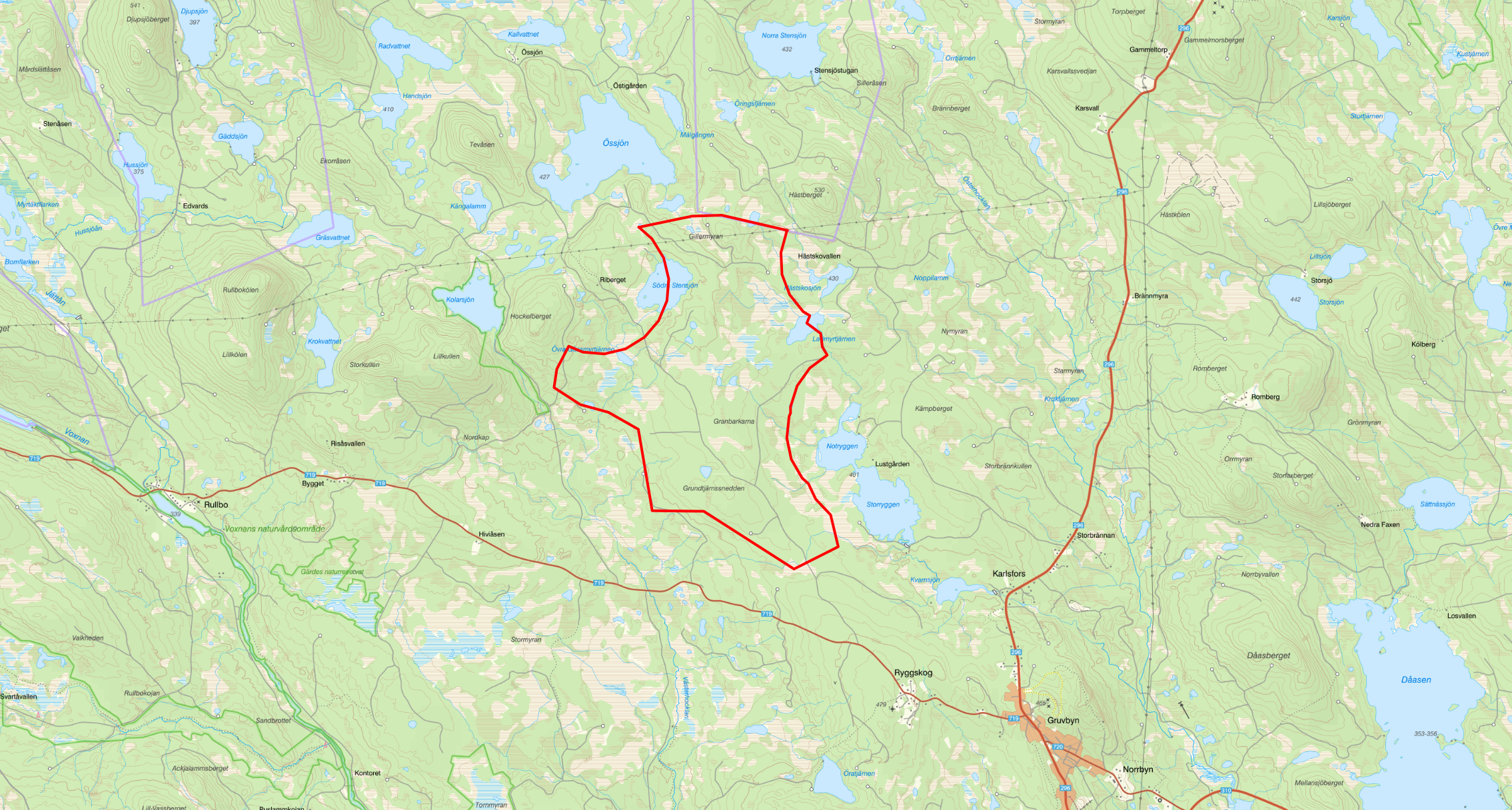
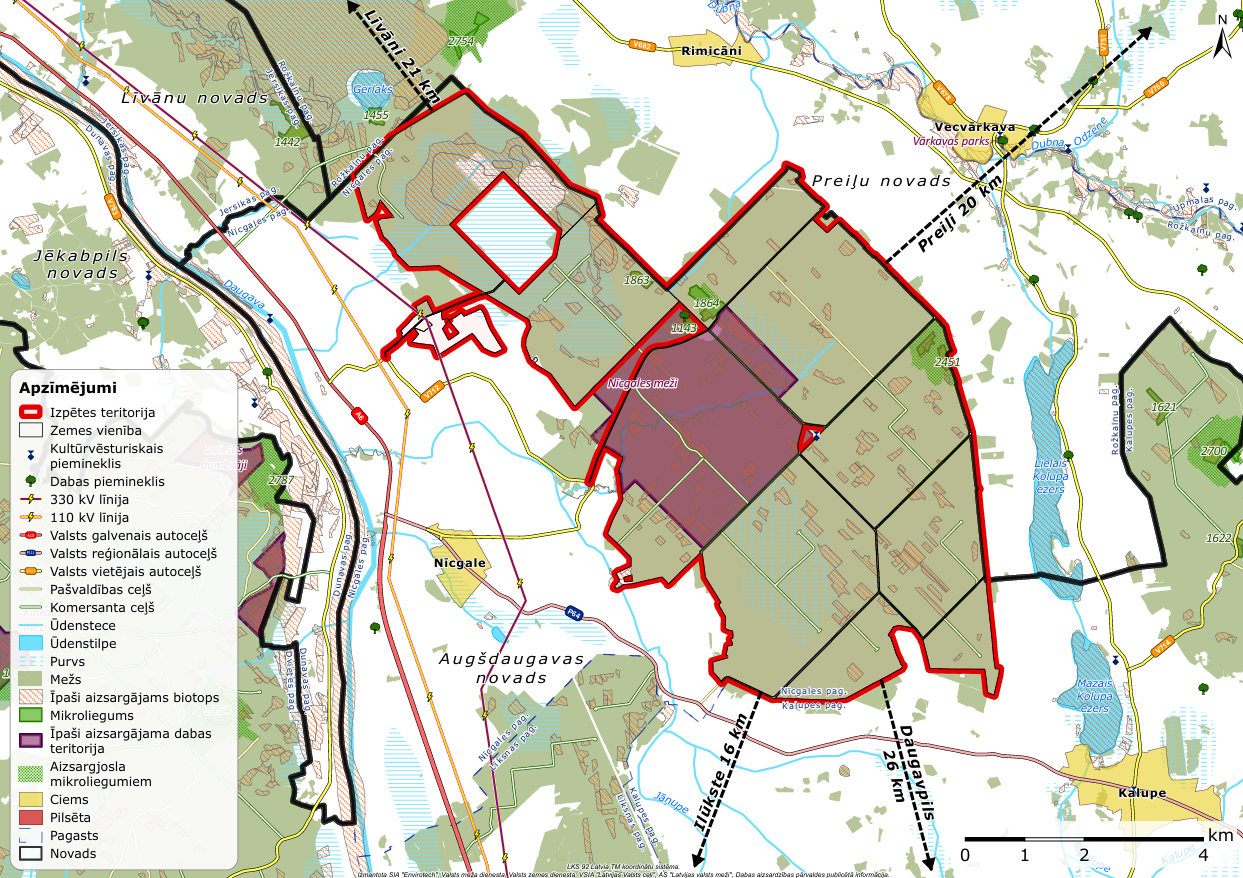
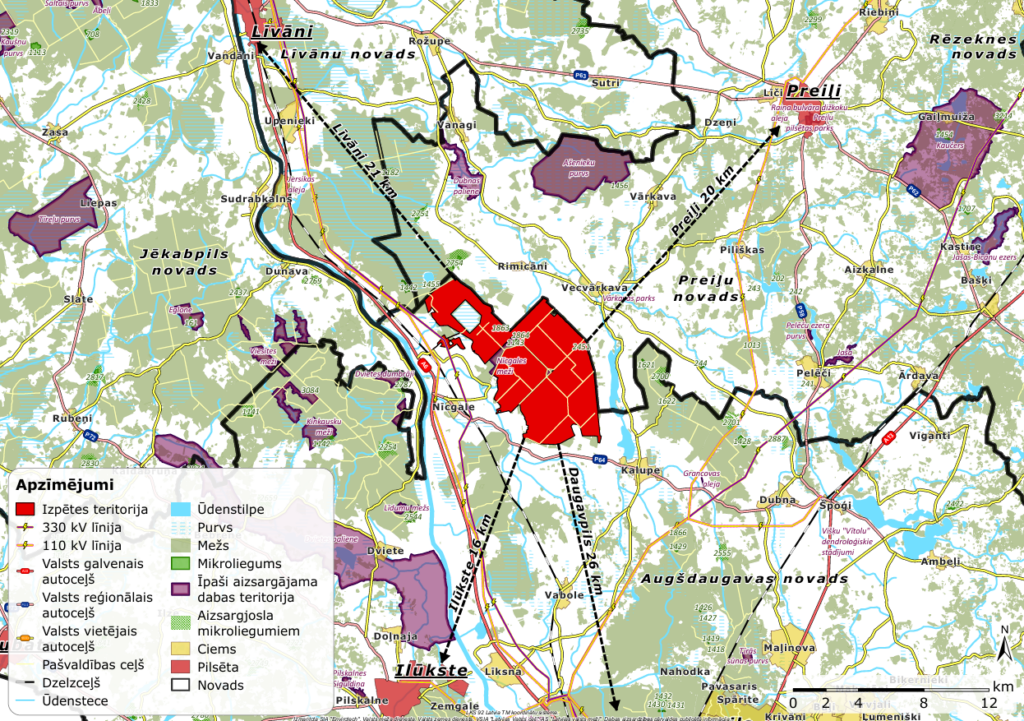
Map

Hamrånge Wind

The Hamrånge project is located approximately 5 km west of Bergby in a sparsely populated area in the northern part of Gävle municipality.

Status
Early stage
Location
Hamrånge, Gävle municipality
Production
Ca 370 GWh
Turbines
16
Turbine height
260-300 meter

Local contribution

The Hamrånge project aligns with the strategies of both the Swedish Energy Agency and the Swedish Environmental Protection Agency, as well as Gävle’s own energy plan, which supports the expansion of wind power. The project will contribute to the industrial climate transition and facilitate hydrogen investments in Gävleborg, making the municipality more attractive for new industries through stable and affordable electricity.

Hamrånge can create around 73 full-time equivalent jobs during construction and six local jobs annually, while also strengthening local businesses by involving multiple sectors. In addition, the municipality and nearby residents will receive financial benefits, contributing to local prosperity. The park will reduce climate impact by approximately 220,800 tons of greenhouse gases per year and help lower electricity prices in Sweden. Hamrånge is expected to meet growing electricity demand and cover part of Gävleborg’s need for expanded power production.

The energy park supports the national strategy to triple onshore wind power production in Gävleborg by 2040, with Hamrånge contributing around eight percent of that expansion requirement. Each additional kilowatt-hour of wind power in Sweden and Europe also strengthens energy security by reducing dependence on fossil fuels from Russia – something increasingly important in today’s geopolitical climate.

The project is also aligned with local public opinion. A Sifo survey from February 2024 showed that 53 percent of residents in Northern Central Sweden believe their municipality should contribute to the continued expansion of wind power in Sweden. This provides further support for the Hamrånge Energy Park, which is being thoroughly assessed by the authorities to ensure that all environmental and societal considerations are taken into account before a final decision is made.

Seven out of ten in Gävle positive about wind power compensation

Seven out of ten (72 percent) residents of Gävle are positive toward state wind power support for municipalities, as well as toward nearby residents and local communities receiving a share of the revenues from wind farms. This is shown in a public opinion survey conducted by Novus, commissioned by the Norwegian-Swedish company Vindr. The survey also shows that six out of ten (59 percent) have a positive attitude toward building onshore wind power in Gävle, while three out of ten (29 percent) are negative.

The Swedish government has decided that municipalities where wind farms are established will receive compensation from the state equivalent to the property tax on wind power. The government also intends to move forward with proposals allowing nearby residents and local communities to share in the revenues generated by wind farms.

In Gävle, 72 percent of residents are positive toward these proposals, while only 15 percent are negative.

“We welcome the government’s decision and direction, which we believe will further increase acceptance of wind power,” says Tjabba Nordanfjäll, Head of Project Development for Vindr Sweden.

There are currently no wind farms in Gävle. Vindr is now conducting a public consultation for the Hamrånge Energy Park, located about five kilometers west of Bergby in a sparsely populated part of northern Gävle Municipality. The energy park may consist of up to 16 wind turbines.

If Gävle receives compensation equivalent to the property tax for 16 turbines, this would amount to an average of SEK 3.2 million per year during the first ten years, and a total of SEK 65 million over 30 years. Revenue sharing with the local community would correspond to approximately SEK 0.7–1.4 million per year, while nearby residents would receive around SEK 0.9 million per year, tax-free (according to a government report).

The Novus survey also shows that roughly twice as many Gävle residents — 52 percent compared to 25 percent — want wind power projects in Gävle to be environmentally assessed and decided by permitting authorities, rather than having the municipality block new wind projects using its veto.

Read more about the Novus survey in the documents section further down the page.

Tidslinje

1 år

Projektidé

1 år

Samråd

Current phase

Möjlighet till synpunkter från allmänheten, kommun, myndigheter och intressenter.

1-2 år

Miljökonsekvens- beskrivning

Beslut ansökan

3-4 år

Ev. komplettering

Ansökan kungörs av Länsstyrelsen

Länsstyrelse, kommun och ev. andra berörda blir tillfragade om kompletteringar behövs

4-5 år

Handläggning

Möjlighet till synpunkter från allmänheten, kommun, myndigheter och intressenter. Kommunens tillstyrkan ska formell lämnas när ansökan kungjorts.

5 år

Beslut: villkor och tillstånd

Länsstyrelsen kungör sitt beslut

Möjlighet till överklagan

5 -

Egenkontroll & Miljötillsyn

Imavere wind farm

Järva & Türi municipalities

Status
In the planning phase
Location
Järva Municipality & Türi Municipality
Height of turbines
Up to 250m
Turbines
Up to 12
Production
Ca 240 GWh

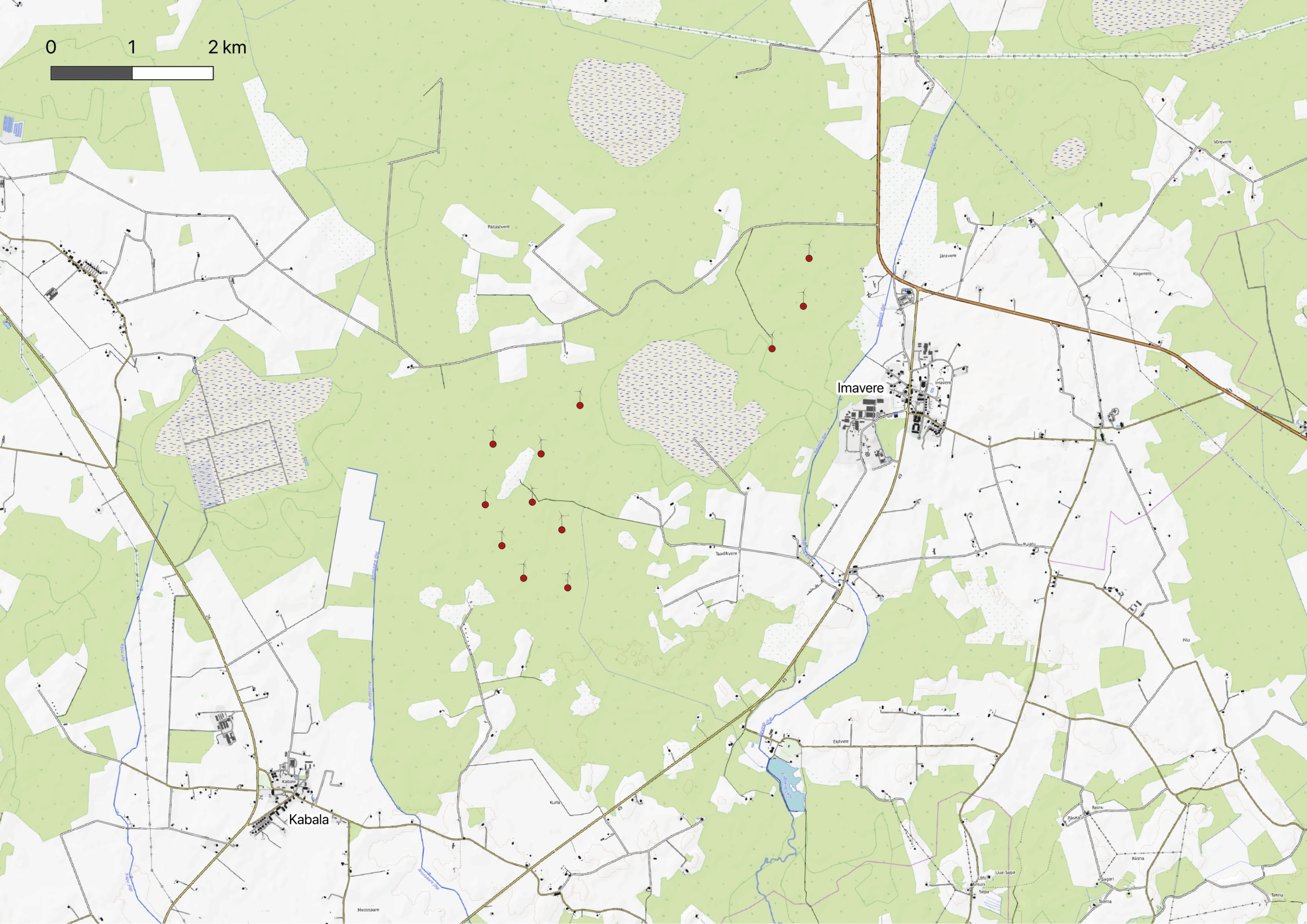
Imavere wind farm area

Project Contact

Who are we?

VINDR IS LEADING THE WAY TOWARDS THE FUTURE OF WIND ENERGY IN THE NORDICS

Vindr is a Nordic renewable energy company committed to shaping the energy systems of the future. We develop wind and solar farms using the latest technologies and industry best practices, contributing to a secure and reliable energy supply.

At the core of our operations is responsible and sustainable energy production that creates long-term value for local people and communities. We believe that every project we develop should deliver lasting benefits and be sustainable from both an environmental and a local community perspective. Our goal is to ensure that our developments contribute positively to the regions in which they are located, both today and for generations to come.

Raka

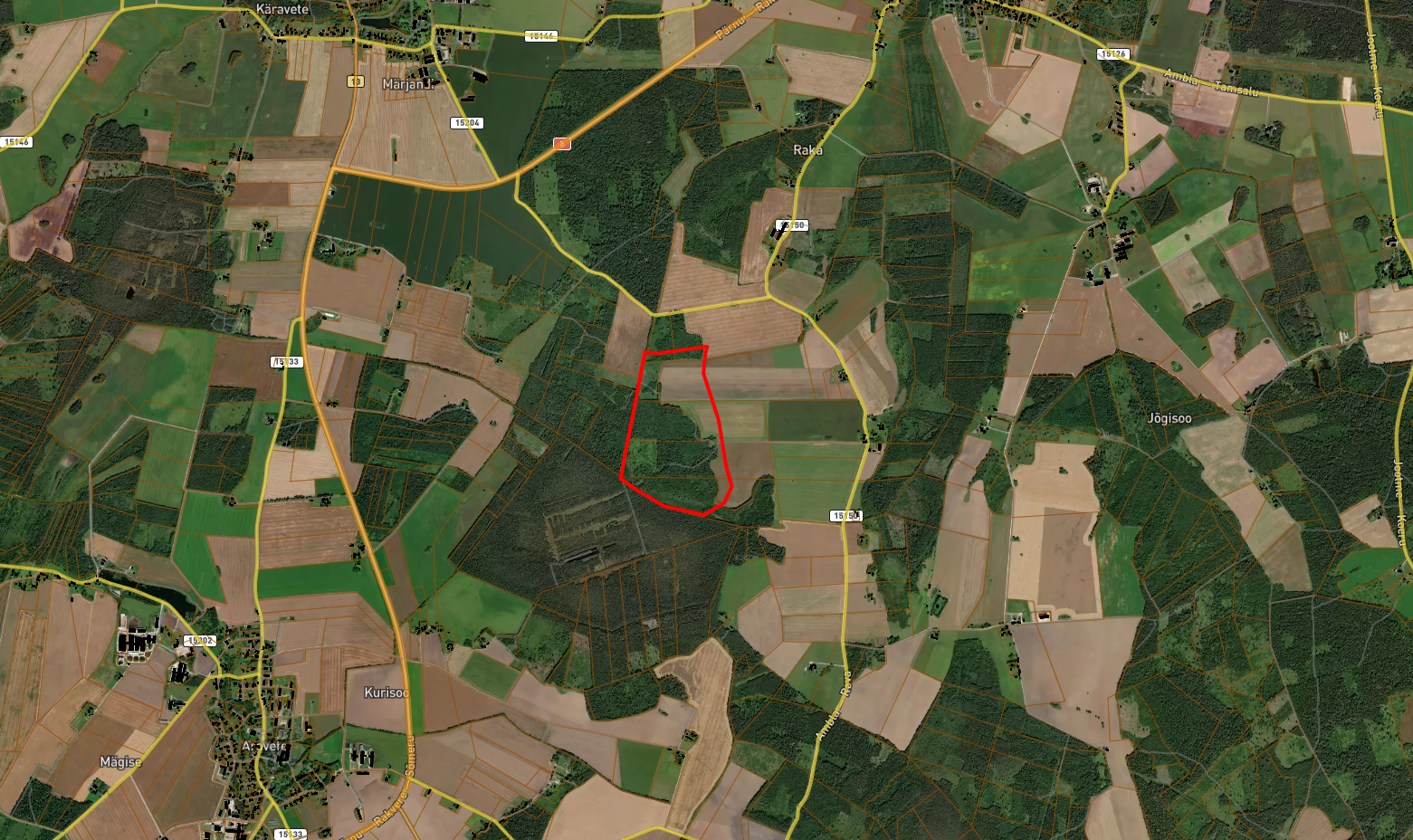
Located in Järva Municipality in Central Estonia, the Raka Wind Project is planned to generate around 100 GWh of renewable electricity annually – enough to supply over 18,000 households. The project will help strengthen Estonia’s renewable energy supply and support local development.

Status
In the planning phase
Location
Järva Municipality, Estonia
Turbines
Up to 5
Production
Ca 100 GWh
Installed capacity
36 MW
Cover annual electricity use of
approximately 18,000 households
Woman wearing white cap sits on the field at sunset. Wind turbines in the background

Local Collaboration and Impact

Direct financial benefit to residents
Residents living within 2–3 kilometres of the wind park will receive direct financial compensation. For turbines planned within the Imavere Wind area, compensation is offered to households located within 2 kilometres of a turbine.
The compensation amount depends on the park’s annual production and the electricity price (estimated at 0.7–1% of revenues).

For example, a 100 MW wind farm (about 14 turbines) with an average electricity price of €80/MWh would generate around €280,000 per year in compensation — distributed between the local municipality and households.

Infrastructure development
Construction of the wind park will include improvements to local infrastructure — such as new and upgraded access roads, crossings, and utility connections — enhancing connectivity and safety in the area.

Support for local business and economy
Locally produced green electricity will strengthen the future competitiveness of energy-intensive sectors such as wood processing, forestry, and agriculture by providing access to clean energy.
The project will stimulate local economic activity, generate tax revenue, and create new job opportunities during construction and operation.

Read about local communities

Project Contact

This site is registered on wpml.org as a development site. Switch to a production site key to remove this banner.